
Yes, you can. Dubai’s tap water is safe to drink straight from DEWA’s treatment plants. The Dubai Electricity and Water Authority produces 99% of the city’s water through reverse osmosis desalination from the Arabian Gulf.
This water meets both the WHO standards and the UAE GSO requirements, as confirmed by dubai.gov. But the safety of water at your tap depends on your building’s maintenance.
This article breaks down the real story behind Dubai’s tap water, the “last mile” problem, and whether you actually need bottled water or a filter.
Is Dubai Tap Water Safe to Drink 2026? (DEWA Water Quality Explained)
DEWA operates state-of-the-art desalination plants that process seawater through multi-stage reverse osmosis. The water undergoes continuous quality testing every day at production facilities and distribution points.
These tests check for bacteria, minerals, chlorine levels, and pH balance to ensure WHO compliance. The water leaving DEWA plants is perfectly safe.
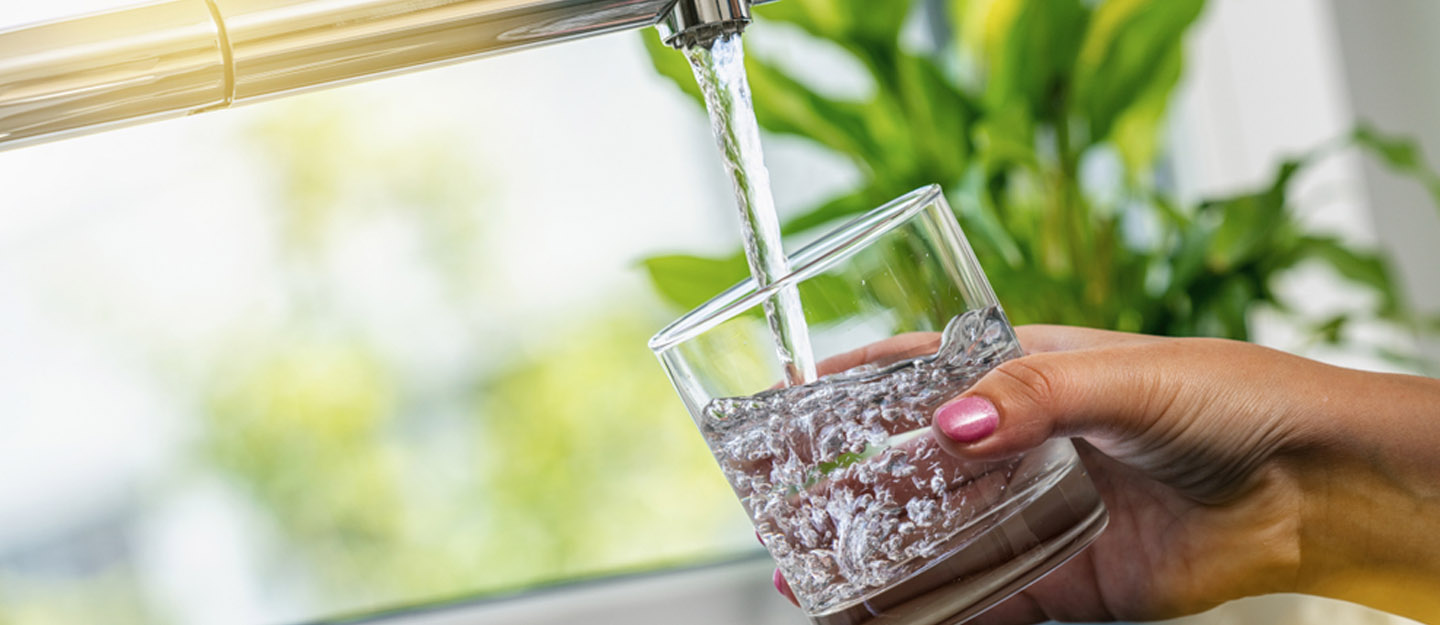
Now let’s take a look at the difference between DEWA Tap Water vs Bottled Water in Dubai:
| Factor | DEWA Tap Water | Bottled Water |
|---|---|---|
| Source | Desalinated seawater | Desalinated / Mineral |
| Regulation | DEWA + Dubai Municipality | Manufacturer + Municipality |
| Safe at the plant? | Yes | Yes |
| Taste | Mild chlorine / flat | Neutral / mineral |
| Cost | Included in the utility bill | Recurring purchase |
Here’s the reality: DEWA water is safe at source. The problem starts after it leaves the main pipeline and enters your building. Once water reaches private property, DEWA’s control ends.
Your building’s landlord or management becomes responsible for storage tanks, internal plumbing, and water quality maintenance.
The “Last Mile” Problem: Why Residents Still Buy Bottled Water
The water traveling from DEWA to your kitchen passes through infrastructure you don’t control. Most Dubai buildings use rooftop storage tanks that collect municipal water before distributing it to apartments.
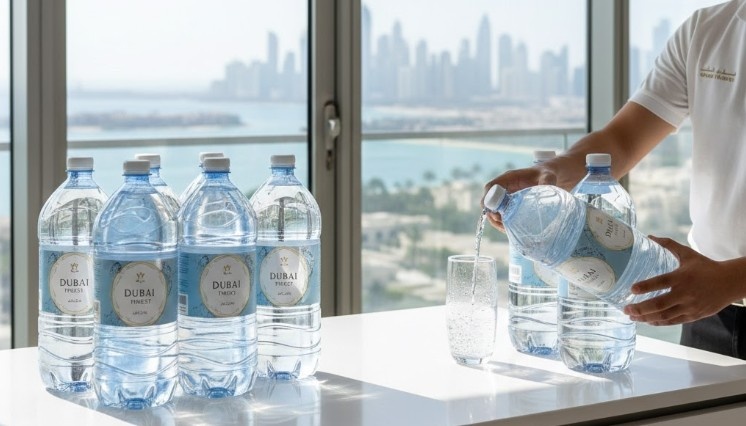
When these tanks aren’t properly maintained, problems begin.
- Private rooftop tanks are the landlord’s responsibility, not DEWA’s.
- Dubai Municipality recommends professional tank cleaning every 6 months minimum.
- Poorly maintained tanks accumulate sediment, rust, and potentially harmful bacteria.
- Older buildings often have corroded pipes that affect water quality.
- These factors cause the metallic or stale taste that residents report.
This explains why residents keep buying bottled water despite official assurances. The chlorine taste you notice is actually a safety measure to prevent bacterial growth during distribution.
Is Tap Water Safe in Dubai Hotels, Airport & UAE?
Dubai hotels operate under strict health and safety regulations that include mandatory tank cleaning schedules and regular water quality audits.
Dubai International Airport maintains the same standards across all terminals, with additional monitoring for food service areas.
Across the UAE, water quality remains consistent, whether you’re in Dubai, Abu Dhabi, or Sharjah; desalination plants follow identical WHO-compliant processes.
Do You Need a Water Filter in Dubai?
It depends on your building’s age and priorities.
Older buildings constructed before 2010 often benefit from filters because aging plumbing can leach metals. Carbon filters remove chlorine taste, while RO systems offer deeper purification for cautious residents.
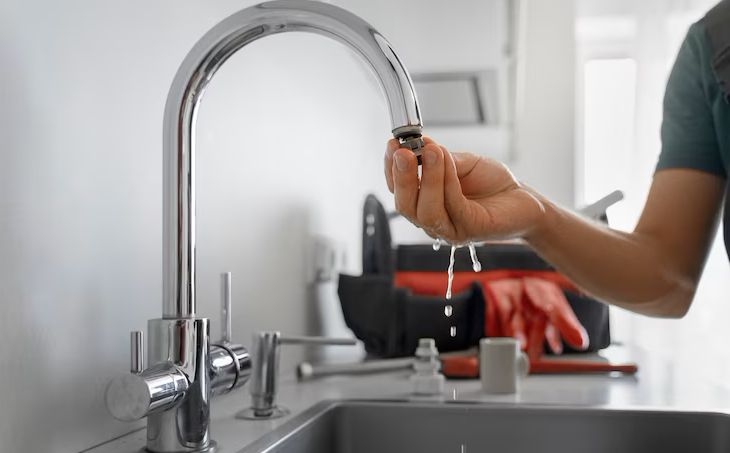
Budget-conscious expats save money with filtered tap water instead of buying weekly bottles. Eco-warriors reduce plastic waste, while Short-term tourists in reputable hotels can drink tap water safely without filters.
You can use tap water for: brushing teeth, washing produce, making coffee and tea, cooking rice and pasta, and making ice cubes.
What Reddit Users Say (Objective View)
Real residents share mixed experiences about drinking tap water in Dubai. Here’s what the community actually says without sugar-coating or dismissing their concerns.
candynickle: Water is safe, but tastes flat from desalination. Hotels maintain clean tanks regularly. Fine for brushing teeth, coffee, and medication, not dangerous like Africa. Bottled water is cheap and tastes better.
Source: Reddit[deleted]: Tap water is clean but desalinated. Government sites mention that contamination risk occurs in building storage tanks. Safe for teeth brushing and cooking. Bottled water stays inexpensive; hotels provide free bottles.

Both users trust DEWA’s production quality but question building-level maintenance. Their takeaway matches official guidance: water is safe at source, but last-mile infrastructure matters for taste and peace of mind.
Conclusion: Dubai Tap Water Is Safe When Buildings Maintain Proper Standards
DEWA produces world-class, WHO-compliant water that’s completely safe at source. What flows from your specific tap depends entirely on your building’s tank maintenance and plumbing age.
Bottled water remains affordable, but filtered tap water saves money and dramatically reduces plastic waste.
Check your building’s maintenance records and make an informed decision that works for your household.
FAQs
Tap water is safe for brushing teeth. DEWA water meets WHO standards, and brief contact poses zero health risk regardless of building age.
Both are safe at source. Bottled water offers a consistent taste and bypasses building tank concerns, but filtered tap water reduces plastic waste.
Switzerland, Iceland, and Norway consistently rank highest for natural tap water purity, followed by New Zealand, Austria, and several Scandinavian nations.
Not mandatory, but recommended for older buildings. Filters improve taste, remove chlorine, and provide peace of mind about building-level water quality.
Yes, across all emirates. Desalination plants in Dubai, Abu Dhabi, and Sharjah follow identical WHO-compliant treatment processes and quality standards.